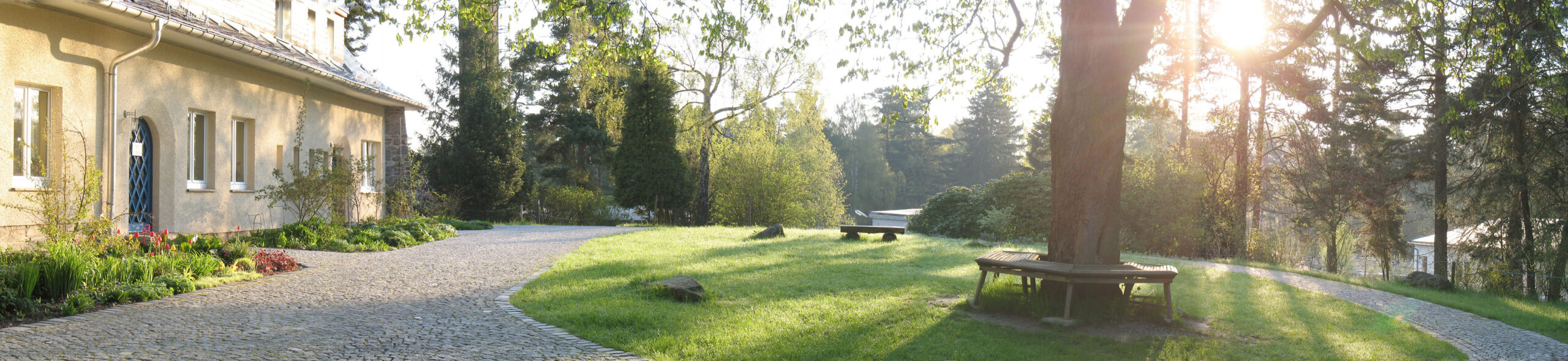
Here you will find information about Vipassana, a meditation technique that teaches you to see things as they really are.
In 10-day courses, participants train their powers of concentration and perception so that they can then use them for in-depth observation and exploration of their own physical and mental reality. This exercise gradually develops insight and equanimity. Negative behavioural patterns such as tension, anger, greed, fear and impatience can be gradually reduced and positive qualities such as balance, tolerance, generosity and compassion can be developed.
Vipassana
Vipassana, which means to see things as they really are, is one of India’s most ancient techniques of meditation. It was rediscovered by Gotama Buddha more than 2500 years ago and was taught by him as a universal remedy for universal ills, i.e., an Art Of Living. This non-sectarian technique aims for the total eradication of mental impurities and the resultant highest happiness of full liberation.
Vipassana is a way of self-transformation through self-observation. It focuses on the deep interconnection between mind and body, which can be experienced directly by disciplined attention to the physical sensations that form the life of the body, and that continuously interconnect and condition the life of the mind. It is this observation-based, self-exploratory journey to the common root of mind and body that dissolves mental impurity, resulting in a balanced mind full of love and compassion.
The scientific laws that operate one’s thoughts, feelings, judgements and sensations become clear. Through direct experience, the nature of how one grows or regresses, how one produces suffering or frees oneself from suffering is understood. Life becomes characterized by increased awareness, non-delusion, self-control and peace.
The Tradition
Since the time of Buddha, Vipassana has been handed down, to the present day, by an unbroken chain of teachers. The current teachers in this tradition were appointed by the late Mr. S.N. Goenka, who was Indian by descent but was born and raised in Burma (Myanmar). While living there, he had the good fortune to learn Vipassana from his teacher, Sayagyi U Ba Khin, who was at the time a high Government official. After receiving training from his teacher for fourteen years, Mr. Goenka settled in India and was authorised by Sayagyi to begin teaching Vipassana in 1969. During his life he taught tens of thousands of people of all races and all religions in both the East and West. In 1982 he began to appoint assistant teachers to help him meet the growing demand for Vipassana courses. Before he passed away in 2013, he left behind a comprehensive system for training and appointment of future teachers in the tradition.
The Courses
The technique is taught at ten-day residential courses during which participants follow a prescribed Code of Discipline, learn the basics of the method, and practice sufficiently to experience its beneficial results.
The course requires hard, serious work. There are three steps to the training. The first step is, for the period of the course, to abstain from killing, stealing, sexual activity, speaking falsely, and intoxicants. This simple code of moral conduct serves to calm the mind, which otherwise would be too agitated to perform the task of self-observation. The next step is to develop some mastery over the mind by learning to fix one’s attention on the natural reality of the ever changing flow of breath as it enters and leaves the nostrils. By the fourth day the mind is calmer and more focused, better able to undertake the practice of Vipassana itself: observing sensations throughout the body, understanding their nature, and developing equanimity by learning not to react to them. Finally, on the last full day participants learn the meditation of loving kindness or goodwill towards all, in which the purity developed during the course is shared with all beings.
The entire practice is actually a mental training. Just as we use physical exercises to improve our bodily health, Vipassana can be used to develop a healthy mind.
Because it has been found to be genuinely helpful, great emphasis is put on preserving the technique in its original, authentic form. It is not taught commercially, but instead is offered freely. No person involved in its teaching receives any material remuneration. There are no charges for the courses – not even to cover the cost of food and accommodation. All expenses are met by donations from people who, having completed a course and experienced the benefits of Vipassana, wish to give others the opportunity to benefit from it also.
Of course, the results come gradually through continued practice. It is unrealistic to expect all problems to be solved in ten days. Within that time, however, the essentials of Vipassana can be learned so that it can be applied in daily life. The more the technique is practiced, the greater the freedom from misery, and the closer the approach to the ultimate goal of full liberation. Even ten days can provide results which are vivid and obviously beneficial in everyday life.
All sincere people are welcome to join a Vipassana course to see for themselves how the technique works and to measure the benefits. All those who try it will find Vipassana to be an invaluable tool with which to achieve and share real happiness with others.
Vipassana, which means to see things as they really are, is one of India's most ancient techniques of meditation. It was rediscovered by Gotama Buddha more than 2500 years ago and was taught by him as a universal remedy for universal ills, i.e., an Art Of Living. This non-sectarian technique aims for the total eradication of mental impurities and the resultant highest happiness of full liberation.
Read more »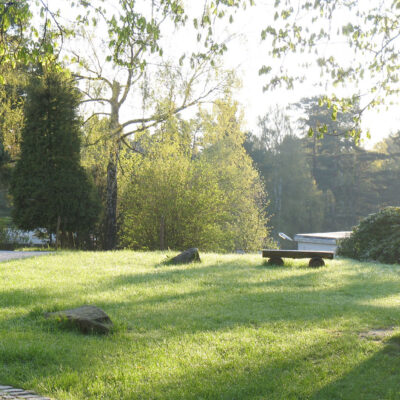
From the Vipassana centre situated on a hilltop in the Saxonian city of Triebel, close to the northern Bavarian city of Hof and the Saxonian city of Plauen, 500 m above sea level, one can look out over the forests and meadows of the landscape called "Vogtland“.
Read more »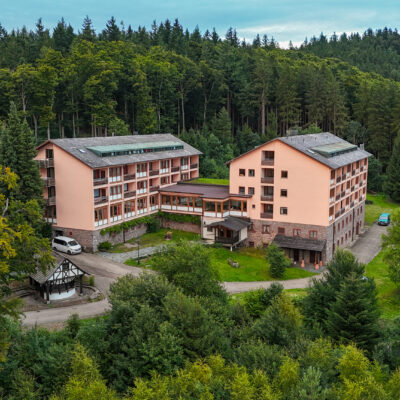
The Hohritt is situated between Karlsruhe and Freiburg at an altitude of 700 meters, offering a magnificent view over the Rhine Valley. The former hotel was acquired on November 5th, 2024, got renovated and prepared for courses. The first courses are running since September 2025.
Read more »A Vipassana course offers the opportunity to learn this art of living, which is also invaluable in everyday life.
The Vipassana Meditation Centre in Triebel usually offers two 10-day courses per month.
These courses are led by assistant teachers of S.N. Goenka. He is the founder of the Vipassana International Academy in Igatpuri, India.
No fees are charged for the courses – not even for board and lodging. All costs incurred are covered by donations from participants of previous courses who, after attending a 10-day course, have experienced the positive effects of Vipassana on themselves and now want to make this experience possible for others.